Showing posts with label Cognitive. Show all posts

Tuesday, September 6, 2022

Useful Websites for Learning at Home

Here are some free resources that could be helpful for learning at home:

Side notes for parents:

We only get one chance as parents to raise our children. It may be the most important thing we ever do. We want to be certain that we are being the best parents we can be. We unquestionably want to give our child the best possible start in life.

Being a parent comes with a lot of responsibility because every choice we make will have an impact on how our child develops. Even though no parent is perfect, we all strive to be. We all want to avoid making "big" parenting errors that will have a lasting negative impact on our kids. With the right plan, we can provide our child with a quality education and maximize their intelligence. A great start in life is something that our child deserves. What could be more important than providing them with the best possible opportunity for a good education?

Wednesday, June 12, 2019

Cultivating Reading Habit in Kids

Many researchers have demonstrated the importance of reading habit in your children. A wealth of studies show that cultivating reading can have a significant impact on children and their future. For example,

  • “Extensive reading was linked to superior performance on measures of general knowledge, vocabulary, spelling, verbal fluency, and reading comprehension.” – Cunningham and Stanovich, 1998
  • “It is clear that reading early in life are critical factors in student success,” – Anthony W. Marx, president of the New York Public Library, New York Times (2015)
  • “Students not reading well in third grade are 4 times more likely to drop out.” – Students First, Statistics About Education in America 
  • “Research consistently shows strong correlation to reading & academic success at all ages” – National Center for Educational Statistics

Reading is a critical skill that needs to be promoted since an early age. Ultimately, the purpose of reading is comprehension - the ability to understand the intended meaning from the text. It is straightforward to see just how reading leads to academic success. Most of a child's learning through reading the textbooks, workbooks, and teacher's writing on the whiteboard. If a child cannot read those things, how would he answer questions of science, math, or any subjects? Impossible!

Here I'm listing three simple and doable tips/approaches on getting a child to read.
  1. Be a role model
    • Action speaks louder than word, isn't it? Plus, kids learn best from their parents. Read whatever you like - newspaper, novel, magazine, etc. - and encourage your kid to join you with his own book while you are reading.
  2. Discuss what your child is reading
    • Show interest in what your kid is reading. For example, while my kids are still reading a storybook, I would usually ask about what happened so far, the characters, and their feedback on the plot. 
  3. Visit a library or a bookstore.
    Perpustakaan Awam Selangor, Shah Alam
    BookXcess, Tamarind Square, Cyberjaya

Friday, October 6, 2017

Cognitive Development: Piaget

Cognitive Development: Jean Piaget
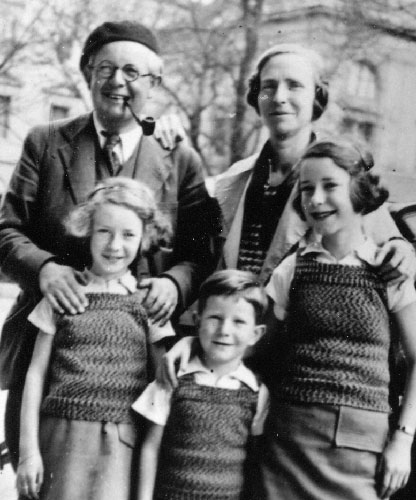
Piaget and his family

       Jean Piaget (1896–1980) was known best for his work in studying the cognitive development of children and adolescents. Piaget hypothesized that children’s cognitive progress through four critical stages in an orderly sequence manner. The four stages correspond with the age of the child, which include the sensorimotor, preoperational, concrete operational and formal operational stages.

       Piaget described and explained cognitive development using concepts like schema, assimilation, accommodation and equilibration. Piaget believed that accommodating and assimilating information develop cognitive operations. Knowledge is invented and reinvented by the means of these two important processes as the child develops and constantly interacts with the world around him.
Piaget's concept of cognitive development

Friday, August 11, 2017

LP - Crawling

Crawling in my skin
These wounds, they will not heal
Fear is how I fall
Confusing what is real

There's something inside me that pulls beneath the surface
Consuming, confusing
This lack of self control I fear is never ending
Controlling
I can't seem
To find myself again
My walls are closing in
(Without a sense of confidence I'm convinced
That there's just too much pressure to take)
I've felt this way before
So insecure

Crawling in my skin
These wounds, they will not heal
Fear is how I fall
Confusing what is real

Discomfort, endlessly has pulled itself upon me
Distracting, reacting
Against my will I stand beside my own reflection
It's haunting how I can't seem

To find myself again
My walls are closing in
(Without a sense of confidence I'm convinced
That there's just too much pressure to take)
I've felt this way before
So insecure

Crawling in my skin
These wounds, they will not heal
Fear is how I fall
Confusing what is real

Crawling in my skin
These wounds, they will not heal
Fear is how I fall
Confusing, confusing what is real

There's something inside me that pulls beneath the surface
Consuming (confusing what is real)
This lack of self control I fear is never ending
Controlling (confusing what is real)


Album: Hybrid Theory
---

Wednesday, May 31, 2017

Babies are geniuses!

It was mesmerizing knowing that newborn babies can differentiate monkey faces. Say for example, while we human know who is Ali and who is Zizi, a newborn knows who is monkey A and who is monkey B.
But, their brilliance isn't just that. They are incredible language learners, way better than adults! Babies have the capability to acquire languages rapidly and effortlessly. Indeed, another puzzle of life!

Kuhl hypothesized that this phenomenon is due to the computational abilities (or statistical learning) and special social skills that embraced by babies innately. (Please watch the video below!)

So, the take-home messages are:
  1. Babies can acquire any languages that they are exposed to. 
  2. But, they need social tutors, not media (TV, audio, etc.) as their language teacher.
  3. Their super-acquisition abilities are at their peak from birth until at age seven. So, don't wait, just start early.
Needless to say the countless benefits children would have when they can speak multiple languages (I might write about this some time later).


Kuhl, P. K. (2004). Early language acquisition: Cracking the speech code. Nature Reviews Neuroscience, 5(11), 831-843.

Tuesday, April 25, 2017

Latih Tubi Matematik

Operasi matematik yang asas (operasi tambah, tolak, darab dan bahagi) perlulah dikuasai dengan mantap semenjak dari kecil supaya dapat diguna pakai untuk penyelesaian masalah matematik yang lebih mencabar dengan berkesannya. Penguaasaan operasi-operasi yang asas ini sangat penting untuk mencapai "number sense" (tahap penguasaan matematik yang tinggi). Tidak dinafikan pencapaian matematik mempunyai implikasi yang penting untuk semua jurusan baik di peringkat pengajian atau applikasi kehidupan. Banyak kajian telah menunjukkan pelajar yang mempunyai penguasaan matematik yang baik akan cemerlang dalam pengajian mereka di universiti (GPA yang tinggi) (Bremer et al., 2013).

Latih tubi perlu kerap dilakukan supaya pelajar dapat membentuk "number sense" sedari awal. Di sini saya sertakan antara latih tubi yang boleh dilakukan. Untuk mencapai kecekapan (fluency) maksimum, tempoh masa latih tubi perlu dikira semasa pelajar membuat latih tubi. Pelajar perlu mempunyai sasaran tempoh masa yang mereka ingin capai. Contohnya, pelajar yang berusia 12 tahun perlu sekurang-kurangnya dapat menyelesaikan 100 soalan (dengan tepat) dalam tempoh kurang daripada 5 minit.

Jika berminat, boleh baca mengenai kehebatan latih tubi yang kerap di sini, saya tulis mengenai salah satu komponen otak manusia yang hebat - hippocampus.

Saturday, April 8, 2017

Memory

Oftentimes, "memory" is the one subject (among other cognitive operations) that genuinely triggers my curiosity and effortlessly prompts me to further explore issues surround it. It's fascinating to comprehend just how memory could induce the underlying meaning of people behavior. For the most part, I actually seek to understand my memory, myself better.

So, what really is memory? For simplicity, memory enables us to learn and remember different types of information by way of independent operations in our brains. Isn't that cool?

I'm particularly interested in (to list just a few):
  • How do we remember things?
  • Why do we remember things?
  • Why do we have strong memories for certain things?
  • Why do we forget things?
  • Can we improve our memory? How? And to what extent?
  • Can we selectively delete some memories?
  • How memory correlates with other cognitive processes?
  • How do we explain dream in relation to memory?
I've better comprehension for some of these questions now that I'm taking my second cognitive class. Still, I have vague idea for some of others. I will continue researching (read: re+searching, not doing experiment) to shed light on these queries.

Saturday, March 11, 2017

Human Brain: Hippocampus


Hippocampus is one of the many important components of human brain. The processes of long-term memory and emotional responses deal heavily on this part of brain.

Knowing hippocampus is particularly important to me because I have a great interest in the REM (Rapid Eye Movement) stage of sleep. REM is the part when we dream in our sleep. So, basically, studies have shown that our hippocampus is active during the REM stage because they are producing new cells and integrating these cells into the neural networks. Psychologists call these process as consolidation. Or to make it more understandable, consolidation is simply a process of integrating new information into previous information that we stored in our memory, i.e. making sense of the new information so that it can be stored in our long-term memory.

Researchers thus came up with a theory suggesting that the more REM we have, the more consolidation process happens; ie the better our memory is. What's more, not only can we benefit this REM stage at night sleep, it's applicable to taking a nap too as shown in a study done by neuroscientists at Harvard University. You can read more from this link.

Practical example:
Let say Ali and Abu have mathematic examination next week. They both allocate the same amount of study time; 4 hours, but they differ in their spacing time.
  • Ali spends the whole 4 hours in a single study session (i.e. his revision is crammed in a day)
  • Abu spaces his study time by spending 1 hour per study session (i.e. his revision is distributed in 4 days)

Whom do you think will score better in exam? Yes, Abu! Indeed, a lot of researches have been done to prove this. (If you are interested, you may want to look at researches on the spacing effect; viz. distributed practice and massed practice).

All in all, the take home message is; in order to enhance our memory consolidation, it's of great importance to sleep with dreams.

Questions to ponder:
- What happen if our hippocampus is damaged or worst, removed?
- How does this hippocampus removal affect our daily life?

** The most famous case study, not limited to just hippocampus study but in all of memory research involves HM (Henry Molaison). More interestingly, his hippocampus is still being displayed in a museum in California. 

Location of Hippocampus

The human hippocampus compared with a seahorse
Hippocampus of human brain compared to a sea horse