Showing posts with label Child Development. Show all posts

Tuesday, September 6, 2022

Useful Websites for Learning at Home

Here are some free resources that could be helpful for learning at home:

Side notes for parents:

We only get one chance as parents to raise our children. It may be the most important thing we ever do. We want to be certain that we are being the best parents we can be. We unquestionably want to give our child the best possible start in life.

Being a parent comes with a lot of responsibility because every choice we make will have an impact on how our child develops. Even though no parent is perfect, we all strive to be. We all want to avoid making "big" parenting errors that will have a lasting negative impact on our kids. With the right plan, we can provide our child with a quality education and maximize their intelligence. A great start in life is something that our child deserves. What could be more important than providing them with the best possible opportunity for a good education?

Wednesday, June 12, 2019

English Stories and Activities

Following my previous post on "Cultivating Reading Habits in Kids", I am sharing here some English stories and activities (relevant to each stories) that parents or teachers can easily use at home or as in-class activity.

To make kids interested in the story, we as parents first need to be engaged and enthusiastic about the story. Here are some easy ways to get the kids enjoy reading:
  1. Read stories with lots of illustrations / pictures. These illustrations could be very good hooks in each story that capture your kids attention and memory.
  2. Ask questions based on the illustrations.
  3. Relate the stories to real daily life.
  4. Don't hesitate to make silly sounds or imitate voices.
  5. Ask prediction questions. Ask what your kid thinks will happen next and how he would tackle a particular situation.
The following are English Stories & Activities, suitable for very young learners (Beginner and Medium Level).


Cultivating Reading Habit in Kids

Many researchers have demonstrated the importance of reading habit in your children. A wealth of studies show that cultivating reading can have a significant impact on children and their future. For example,

  • “Extensive reading was linked to superior performance on measures of general knowledge, vocabulary, spelling, verbal fluency, and reading comprehension.” – Cunningham and Stanovich, 1998
  • “It is clear that reading early in life are critical factors in student success,” – Anthony W. Marx, president of the New York Public Library, New York Times (2015)
  • “Students not reading well in third grade are 4 times more likely to drop out.” – Students First, Statistics About Education in America 
  • “Research consistently shows strong correlation to reading & academic success at all ages” – National Center for Educational Statistics

Reading is a critical skill that needs to be promoted since an early age. Ultimately, the purpose of reading is comprehension - the ability to understand the intended meaning from the text. It is straightforward to see just how reading leads to academic success. Most of a child's learning through reading the textbooks, workbooks, and teacher's writing on the whiteboard. If a child cannot read those things, how would he answer questions of science, math, or any subjects? Impossible!

Here I'm listing three simple and doable tips/approaches on getting a child to read.
  1. Be a role model
    • Action speaks louder than word, isn't it? Plus, kids learn best from their parents. Read whatever you like - newspaper, novel, magazine, etc. - and encourage your kid to join you with his own book while you are reading.
  2. Discuss what your child is reading
    • Show interest in what your kid is reading. For example, while my kids are still reading a storybook, I would usually ask about what happened so far, the characters, and their feedback on the plot. 
  3. Visit a library or a bookstore.
    Perpustakaan Awam Selangor, Shah Alam
    BookXcess, Tamarind Square, Cyberjaya

Friday, October 6, 2017

Cognitive Development: Piaget

Cognitive Development: Jean Piaget
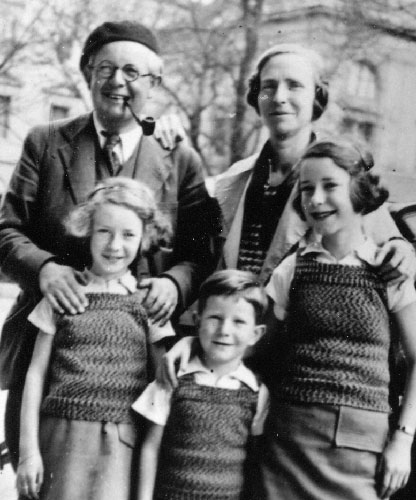
Piaget and his family

       Jean Piaget (1896–1980) was known best for his work in studying the cognitive development of children and adolescents. Piaget hypothesized that children’s cognitive progress through four critical stages in an orderly sequence manner. The four stages correspond with the age of the child, which include the sensorimotor, preoperational, concrete operational and formal operational stages.

       Piaget described and explained cognitive development using concepts like schema, assimilation, accommodation and equilibration. Piaget believed that accommodating and assimilating information develop cognitive operations. Knowledge is invented and reinvented by the means of these two important processes as the child develops and constantly interacts with the world around him.
Piaget's concept of cognitive development

Monday, June 5, 2017

Prenatal Development: Environmental Factors (III)

Drugs Taken by the Parents


1. Thalidomide
  • In the 1960s, it was used to treat insomnia and nausea.
  • Now, it is used to treat disorders as various as dermatological problems and Kaposi's sarcoma.
  • Effects: babies with missing or stunted limbs will be born
2. Antibiotics
  • Tetracycline is usually prescribed for bacterial infections.
  • Effects: babies with yellowed teeth and bone abnormalities.

Sunday, June 4, 2017

Prenatal Development: Environmental Factors (II)

B. Teratogens and Health Problems of the Mother
  • Teratogens are environmental agents that can harm the embryo or fetus (e.g., drugs, alcohol, radiation, etc.)
  • The harmful effects of teratogens varies according to the critical period that correspond to the times when organs are developing.
  • For example, the heart is most vulnerable to certain teratogens in the third to fifth weeks after conception. Thus, the same teratogens that can harm a 4-week-old embryo may have no effect on a 4-month-old fetus.


Saturday, June 3, 2017

Prenatal Development: Environmental Factors (I)

There's nothing much we can do if a child's defect in development is due to natural factors, commonly known as the heredity factors (the genetics). But, as technology progresses, scientists have identified more of external factors that could affect baby's development and growth. Compared to natural factors, we could take necessary action and prevention, thanks to sound knowledge and understanding of these factors. So, here I lay out some of the environmental factors that could affect prenatal development and actions that could be taken to address the issue.

A. Nutrition

How a mother's nutrition affects the prenatal development?
  • Malnutrition in the mother is associated with low birth weight, prematurity, stunted growth, retardation of brain development, cognitive deficiencies, behavioral problems, and cardiovascular disease.
  • Mother's obesity is linked to a higher risk of stillbirth and neural tube defects (brain, spinal cords and related structures don't form properly).
Neural Tube Defects.

What should a pregnant woman eat?
  • To give birth a healthy baby, a pregnant women should consume a well-rounded diet, i.e., food high in: 
    • protein - red meat, fish, poultry, eggs, beans, milk, cheese
    • Vitamin A - milk, vegetables
    • Vitamin B - wheat germs, whole grain breads, liver
    • Vitamin C - citrus food
    • Vitamin D - fish-liver oil, and sunshine exposure
    • Vitamin E - whole grains, eggs, peanuts, some vegetables
    • calcium - dairy products
    • iron - meat (esp. liver), egg yolks, fish, raisins
    • minerals zinc and cobalt - seafood
    • calories
    • folic acid - leafy green vegetables
  • Pregnant women who take folic acid supplements reduce the risk of babies having the neural tube defects.
  • Those who eat a balanced diet don't require to take supplements but most doctors recommend them to be safe.
Sources of folic acid

What is the normal gain in weight for pregnant women?
  • Inadequate weight gain increases the likelihood of having a premature or low-birth-weight baby.
  • The desirable weight gain is between 10kg to 15 kg of gain during pregnancy.

To read on other external factors, click here.

Reference:
Rathus, S. A. (2008). Childhood and Adolescence: Voyages in Development. Belmont, CA: Thomson Wadsworth.